US Trade Agreements: Asian Drama Availability

Recent U.S. trade agreements are poised to significantly alter the landscape of Asian drama content availability, impacting streaming platforms and viewer access across the United States.
The world of Asian dramas has captivated millions globally, with their compelling narratives and rich cultural insights. However, the future accessibility of these beloved series in the United States is increasingly intertwined with complex geopolitical and economic factors. This analysis delves into the impact of recent U.S. trade agreements on Asian drama content availability in 2025, exploring how policy shifts could reshape your streaming experience and the content libraries of major platforms.
Understanding the Trade Landscape Affecting Asian Dramas
The availability of Asian drama content in the U.S. is not merely a matter of viewer demand; it’s intricately linked to international trade policies, intellectual property rights, and digital content distribution agreements. These often-overlooked factors play a crucial role in determining which series make it to American screens and under what terms.
Recent trade agreements, while broad in scope, frequently include clauses that directly or indirectly influence the digital economy, cross-border data flows, and intellectual property protections. For Asian drama content, this means that everything from licensing fees to censorship considerations can be affected by these overarching policies.
Key Trade Agreement Components
Several components within these agreements hold particular relevance for the entertainment industry. Understanding them is key to predicting future trends in content availability.
- Intellectual Property Rights (IPR): Stronger IPR clauses can lead to higher licensing costs for content creators, potentially limiting the number of dramas acquired by U.S. distributors. Conversely, they can also protect creators from piracy, encouraging more investment in high-quality productions.
- Digital Trade Provisions: These provisions govern how data, including streaming content, crosses borders. They can impact data localization requirements, which might necessitate content hosting within specific countries, adding to operational costs for streaming services.
- Market Access for Services: Agreements often aim to open up markets for service providers, including those in the entertainment sector. This could theoretically make it easier for Asian production houses to directly license content to U.S. platforms or even launch their own streaming services in the U.S.
The interplay of these elements creates a dynamic environment where the flow of entertainment content is constantly being renegotiated. The implications for fans of Asian dramas are substantial, potentially leading to either an expansion or contraction of available titles.
Direct Impact on Licensing and Distribution Models
U.S. trade agreements have a direct bearing on the business models employed by companies that license and distribute Asian drama content. These agreements can alter the financial viability of acquiring certain titles and influence the strategic decisions of major streaming platforms.
In 2025, we anticipate a continued evolution in how content is acquired. Streamers will likely become more selective, prioritizing content with proven appeal or those that align with new trade-facilitated partnerships. This could mean a shift from broad acquisition strategies to more targeted, exclusive deals.
Exclusive Deals and Regional Restrictions
One notable trend is the increase in exclusive licensing deals. Trade agreements that streamline cross-border transactions and reduce regulatory hurdles can empower larger players to secure exclusive rights more easily. This can be a double-edged sword for consumers.
- Pros: Exclusive deals often mean higher production quality due to increased investment from the acquiring platform, and more consistent availability within that platform’s library.
- Cons: Content can become fragmented across multiple services, requiring viewers to subscribe to several platforms to access their desired shows. This can lead to increased costs for the consumer.
Furthermore, trade agreements might influence regional rights. A show available on one platform in the U.S. might be unavailable on the same platform in other regions due to differing licensing agreements, which are often shaped by international trade frameworks. This complexity can be frustrating for viewers who encounter geo-restrictions.
The direct impact on licensing and distribution models ultimately translates into changes in what viewers can access. Platforms must navigate these trade policies to remain competitive and deliver content efficiently to their subscriber base.
The Role of Intellectual Property and Anti-Piracy Measures
Intellectual property (IP) protection is a cornerstone of many U.S. trade agreements, and its enforcement directly affects the value and availability of Asian drama content. Stronger IP clauses aim to combat piracy, which is a significant concern for content creators and distributors worldwide.
In 2025, we expect to see intensified efforts to protect intellectual property under the framework of these agreements. This could manifest in several ways, from increased legal action against illegal streaming sites to enhanced technological measures to prevent unauthorized distribution.
Benefits of Enhanced IP Protection
For the Asian drama industry, robust IP protection offers several advantages that can indirectly benefit U.S. viewers.
- Increased Investment: When creators know their work is protected, they are more likely to invest in high-quality productions, leading to better dramas for audiences.
- Fairer Compensation: Proper enforcement ensures that creators and distributors receive fair compensation for their work, incentivizing continued content creation.
- Broader Official Availability: As piracy becomes harder, legal streaming options become more attractive and necessary, potentially driving platforms to acquire a wider range of titles.
However, the implementation of these measures can also have unintended consequences. Overly strict IP enforcement, particularly in developing markets, might sometimes stifle smaller distributors or independent creators who struggle with compliance costs. This delicate balance is crucial for fostering a healthy content ecosystem.
Ultimately, the role of intellectual property and anti-piracy measures within U.S. trade agreements is to ensure a sustainable and fair environment for content creation and distribution, ideally expanding the legitimate availability of Asian dramas.
Geopolitical Tensions and Their Unforeseen Consequences
Beyond the explicit terms of trade agreements, geopolitical tensions can cast a long shadow over cultural exchange, including the availability of Asian dramas. The relationship between the U.S. and various Asian nations is complex and constantly evolving, with political developments sometimes influencing economic and cultural ties.
In 2025, any escalation or de-escalation of geopolitical tensions could rapidly alter the landscape of content availability. For instance, heightened political friction might lead to stricter cultural import regulations or a reluctance from either side to engage in content licensing, even if not explicitly mandated by trade agreements.
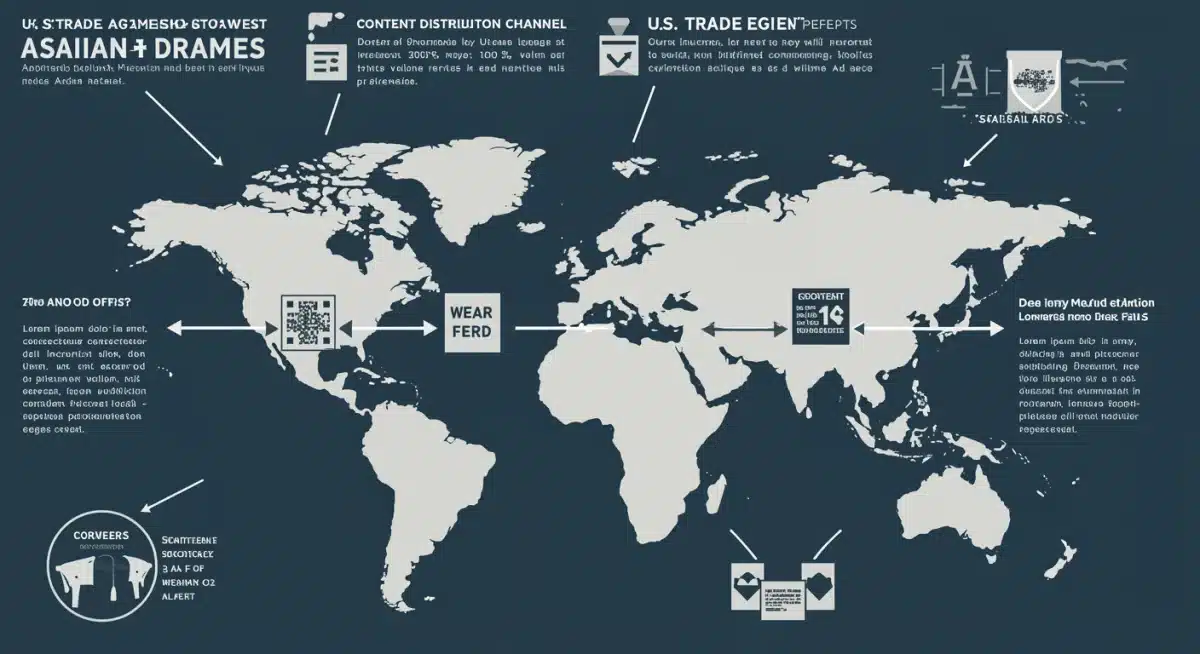

Cultural Diplomacy and Soft Power
Asian dramas, particularly K-dramas, have become significant tools of cultural diplomacy and soft power. Governments often recognize the value of these cultural exports in building international goodwill and influence. Therefore, decisions regarding content availability can sometimes be influenced by broader foreign policy objectives.
A positive shift in diplomatic relations could lead to:
- Increased Cultural Exchange Programs: These programs can facilitate easier content licensing and distribution.
- Governmental Support for Content Export: Asian governments might offer incentives for their dramas to reach broader international audiences, including the U.S.
- Reduced Bureaucratic Hurdles: Improved relations can simply make the process of importing and distributing content smoother and faster.
Conversely, strained relations could result in a more cautious approach to cultural imports, potentially limiting the diversity or volume of content available. These unforeseen consequences highlight the intricate web connecting trade, politics, and entertainment.
Emerging Markets and New Content Partnerships
While established Asian drama markets like South Korea, Japan, and China continue to dominate, U.S. trade agreements could also foster the emergence of new content partnerships with other Asian countries. As economies grow and digital infrastructure improves across Southeast Asia and other regions, their drama industries are also expanding.
In 2025, trade policies that promote broader economic engagement with a diverse range of Asian nations could unlock a wealth of new content for American viewers. This diversification would not only enrich streaming libraries but also introduce audiences to different cultural perspectives and storytelling traditions.
Opportunities for Niche Content
New partnerships often bring opportunities for niche content that might not have previously found a large international audience. This includes:
- Dramas from smaller production houses: These might gain access to U.S. platforms through trade-facilitated agreements.
- Genre-specific content: Expanding beyond mainstream romance or historical dramas to include more unique or experimental genres.
- Regional co-productions: Trade agreements can incentivize joint ventures between U.S. and Asian production companies, leading to hybrid content that appeals to a broader audience.
The potential for these emerging markets to contribute to the Asian drama landscape in the U.S. is significant. Trade agreements that lower barriers to entry and promote fair competition can be instrumental in bringing this diverse content to light, offering viewers an even richer selection of dramas.
Consumer Access and Streaming Platform Strategies in 2025
Ultimately, the impact of U.S. trade agreements on Asian drama content availability in 2025 will be felt most directly by consumers through the offerings of streaming platforms. These platforms are constantly adapting their strategies to navigate the evolving trade landscape, aiming to balance content acquisition costs with subscriber growth.
We anticipate that platforms will become increasingly strategic in their content curation. Instead of simply acquiring a vast quantity of titles, they may focus on securing high-quality, exclusive content that differentiates them from competitors, especially if trade agreements make broad licensing more challenging or expensive.
Adapting to Policy Shifts
Streaming services will need to remain agile in response to policy shifts. This could involve:
- Diversifying Content Sources: Looking beyond traditional content hubs to explore emerging markets that offer more favorable licensing terms under new trade frameworks.
- Investing in Original Productions: If external content acquisition becomes too complex or costly, platforms might increase their investment in U.S.-produced content with Asian themes or co-productions with Asian partners.
- Geo-targeting and Localization: Refining strategies for geo-restricted content and investing more in localization (subtitles, dubbing) to maximize the reach of acquired dramas, irrespective of trade barriers.
The ultimate goal for streaming platforms will be to maintain a compelling library of Asian dramas that satisfies viewer demand while operating within the confines of international trade policies. For consumers, this means staying informed about platform announcements and potentially exploring new services as the landscape shifts.
Future Outlook: Navigating the Evolving Content Landscape
The trajectory of Asian drama content availability in the U.S. is undoubtedly influenced by the intricate dance of international trade agreements. As we look towards 2025, it’s clear that these agreements are not static documents but living frameworks that continually shape the global flow of cultural goods, including our beloved dramas.
The future outlook suggests a landscape characterized by both challenges and opportunities. While some trade provisions might introduce complexities in licensing and distribution, others could open doors to unprecedented content diversity and new partnerships. The key for both content providers and consumers will be adaptability and awareness.
Preparing for Changes
For fans, preparing for these changes means being open to exploring new platforms, understanding regional content variations, and supporting official streaming channels to ensure the continued growth of the industry. For stakeholders, it involves careful navigation of legal frameworks and strategic investments.
- Policy Monitoring: Continuous monitoring of trade policy developments will be crucial for streaming services and content distributors.
- Strategic Alliances: Forming stronger alliances with Asian content creators and government bodies can help mitigate risks and unlock new opportunities.
- Audience Engagement: Understanding audience preferences will guide content acquisition strategies, ensuring that platforms invest in dramas that resonate with U.S. viewers.
The evolving content landscape promises an interesting future for Asian drama enthusiasts. While trade agreements introduce an element of uncertainty, they also present a chance for a richer, more diverse array of dramas to reach American screens, provided stakeholders can skillfully navigate the complexities.
| Key Aspect | Impact on Asian Dramas in US (2025) |
|---|---|
| Licensing & Distribution | Potential for more exclusive deals and increased fragmentation across streaming platforms, driven by trade terms. |
| Intellectual Property | Stronger protections aim to reduce piracy, potentially encouraging higher quality productions and broader official availability. |
| Geopolitical Factors | Tensions or improved relations can significantly influence cultural exchange and content flow, beyond explicit trade clauses. |
| Emerging Markets | New trade partnerships could unlock diverse content from previously underexposed Asian regions, enriching U.S. libraries. |
Frequently Asked Questions About Asian Drama Availability
U.S. trade agreements can influence streaming platforms by altering licensing costs, introducing data localization requirements, and shaping intellectual property protections. These factors directly impact content acquisition strategies, potentially leading to more exclusive deals or changes in content libraries.
The outcome is complex. Stronger IP protections could encourage more investment in quality content, increasing overall availability. However, higher licensing costs or geopolitical tensions, influenced by trade, might lead to more selective content acquisition by U.S. platforms, potentially fragmenting access.
Typically, high-budget, mainstream dramas from major production hubs might remain consistently available due to their broad appeal and financial backing. Niche genres or content from smaller emerging markets could be more susceptible to shifts in trade policies, either gaining or losing access depending on specific agreements.
Cultural diplomacy, often intertwined with trade relations, significantly impacts content flow. Positive diplomatic ties can facilitate easier licensing and distribution of dramas, as they are seen as valuable cultural exports. Conversely, strained relations might create barriers, even without explicit trade restrictions.
Viewers should follow entertainment news outlets, official announcements from streaming platforms, and industry analyses. Engaging with fan communities and forums can also provide insights into regional availability and upcoming content shifts influenced by trade policies and licensing agreements.
Conclusion
The analysis of recent U.S. trade agreements reveals a multifaceted impact on Asian drama content availability in 2025. While these agreements are primarily economic and political instruments, their ripple effects extend deeply into the cultural sphere, shaping what American audiences can stream. From intellectual property protections influencing licensing costs to geopolitical dynamics subtly altering cultural exchange, the landscape for Asian dramas is in constant flux. For fans, this means a future that could bring both greater diversity and increased fragmentation, underscoring the importance of understanding the intricate connections between global policy and entertainment.