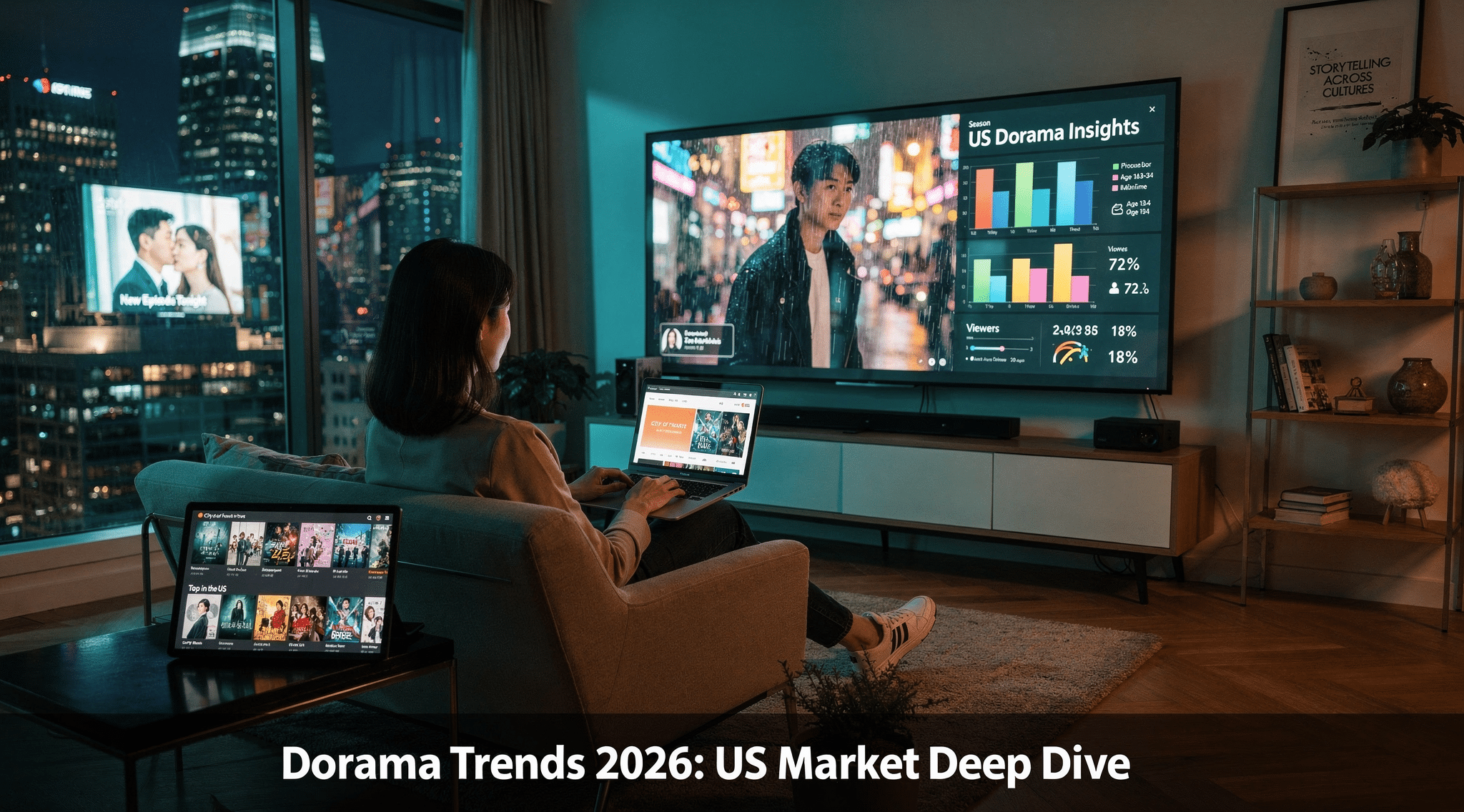
The landscape of global entertainment is constantly shifting, and few sectors exemplify this dynamism more than the world of dorama. What began as a niche interest has blossomed into a global phenomenon, captivating audiences across continents. As we look ahead to 2026, the US market, in particular, is poised for significant evolution in its consumption and production of dorama content. This article will undertake a deep dive into the 3 major Dorama Trends 2026 that are expected to reshape how American audiences engage with these compelling narratives, from South Korea’s K-dramas to Japan’s J-dramas, China’s C-dramas, and beyond.
Understanding these emerging Dorama Trends 2026 is crucial for industry stakeholders, content creators, and dedicated fans alike. The confluence of technological advancements, changing audience preferences, and increased cultural exchange is creating a fertile ground for innovation and diversification within the dorama ecosystem. We’ll explore how these trends are not just superficial shifts but fundamental transformations that will define the next era of Asian drama viewership in the United States.
Trend 1: The Hyper-Specialization of Genres and Niche Storytelling
One of the most significant Dorama Trends 2026 we anticipate is the hyper-specialization of genres. While mainstream romantic comedies and melodramas will always hold a place, the US audience is increasingly sophisticated and hungry for narratives that delve into more specific, often unconventional, themes. This trend is a natural progression from the initial boom of generalized dorama popularity, moving towards a more fragmented but deeply engaged viewership.
Beyond Romance: The Rise of Genre Hybrids and Darker Themes
For years, the gateway for many US viewers into dorama was through romantic comedies and heartwarming tales. While these remain popular, 2026 will see a surge in dorama content exploring complex psychological thrillers, high-concept sci-fi, gritty crime dramas, and even intricate historical fantasies with mature themes. We’re talking about stories that aren’t afraid to tackle societal issues, moral ambiguities, and the darker facets of human nature. This shift caters to an audience accustomed to the diverse offerings of Western premium cable and streaming services, seeking similar depth and complexity in their Asian drama choices.
This hyper-specialization also manifests in genre hybrids. Imagine a historical drama infused with elements of magical realism and a dash of cyberpunk, or a medical drama that doubles as a political satire. These innovative combinations push creative boundaries, offering fresh perspectives and keeping the content from becoming stale. The success of shows like ‘Squid Game’ or ‘Kingdom’ has already paved the way, demonstrating American audiences’ appetite for high-stakes, genre-bending narratives from Asia. Expect more productions to lean into this, with higher budgets and production values to match the ambitious storytelling.
Micro-Niches and Fandom-Driven Content
Furthermore, the Dorama Trends 2026 will highlight the power of micro-niches. Content creators will begin to target very specific communities with tailor-made stories. This could include dramas centered around specific professions (e.g., esports players, forensic anthropologists, urban planners), unique hobbies, or even subcultures within a broader society. The beauty of this approach is that while the initial audience might be smaller, their engagement is incredibly deep and passionate. These dedicated fanbases become powerful advocates, driving organic word-of-mouth promotion and fostering a strong sense of community around the content.
The rise of fan fiction, fan art, and online discussions around specific dorama themes has shown that audiences crave content that resonates deeply with their personal interests. Producers and streaming platforms will increasingly leverage data analytics to identify these burgeoning micro-niches and commission content that directly appeals to them. This strategy ensures a loyal viewership and provides a more diverse portfolio of offerings, moving beyond a one-size-fits-all approach. For example, a dorama focusing on the challenges of independent game development in Seoul might not attract millions initially, but it will captivate the global gaming community, leading to sustained viewership and critical acclaim within that specific demographic.
Trend 2: The Ascent of Interactive Storytelling and Audience Co-creation
The second major trend defining Dorama Trends 2026 in the US market is the significant shift towards interactive storytelling and greater audience participation. Passive viewing is slowly giving way to active engagement, as technology enables new ways for viewers to influence narratives and connect with their favorite shows on a deeper level.
Choose Your Own Adventure: The Evolution of Narrative Control
Building on the experimental forays seen in Western content (like Netflix’s ‘Bandersnatch’), dorama will increasingly integrate elements of ‘choose your own adventure’ narratives. While not every series will adopt this, expect to see special episodes, spin-offs, or even entire mini-series where viewers can make choices that affect plot progression, character outcomes, or even explore alternative endings. This offers an unparalleled level of immersion, transforming the viewer from a mere observer into an active participant in the story’s unfolding. The technological infrastructure for this is becoming more robust, and audiences, particularly younger demographics, are primed for such experiences.
This trend isn’t just about branching storylines; it’s also about varying perspectives. Imagine a dorama where you can switch viewpoints between different characters, gaining unique insights into their motivations and internal monologues. This multi-perspective storytelling enriches the narrative, encourages re-watching, and deepens emotional connections with the characters. Platforms will invest in user-friendly interfaces that make these interactive elements seamless and intuitive, ensuring the focus remains on the story, not the technology.
Real-Time Engagement and Community Building
Beyond direct narrative control, Dorama Trends 2026 will emphasize real-time engagement and community co-creation. This involves integrating social media and live-streaming elements directly into the viewing experience. Picture live Q&A sessions with cast and crew immediately after an episode airs, interactive polls that influence minor plot points in future episodes, or even fan-submitted content (like artwork or short stories) being featured within the official dorama ecosystem.
Platforms will likely develop dedicated in-app social features, allowing viewers to chat, react, and discuss episodes in real-time with other fans. This fosters a strong sense of community, similar to how sports fans engage during live games. Furthermore, the concept of ‘fan service’ will evolve beyond simple behind-the-scenes content. Producers might solicit fan ideas for character backstories, minor plot developments, or even costume designs, giving the audience a genuine sense of ownership and contribution. This co-creative model not only boosts engagement but also generates invaluable qualitative data for future content development, creating a virtuous cycle of audience-driven entertainment.
Trend 3: The Era of Pan-Asian Co-productions and Cross-Cultural Storytelling
The third pivotal trend within Dorama Trends 2026 is the significant rise of pan-Asian co-productions and an increased focus on cross-cultural storytelling. As the global reach of dorama expands, so does the understanding that a collaborative approach can unlock new creative potentials and appeal to an even broader international audience, especially in the diverse US market.
Breaking Down Borders: Collaborative Production Models
Historically, dorama has often been categorized by its country of origin: K-drama, J-drama, C-drama, etc. While these distinctions will remain, 2026 will see a blurring of these lines through more frequent and ambitious co-production ventures. This means dramas jointly produced by studios from South Korea and Japan, or China and Thailand, for example, pooling talent, resources, and creative visions. This collaboration allows for richer storytelling, combining the unique strengths and narrative styles of different Asian cultures.
Imagine a mystery thriller that leverages the meticulous plotting of a Japanese production, the emotional depth of a Korean screenplay, and the visual grandeur of a Chinese studio. These cross-border collaborations also open up new markets for talent, allowing actors, directors, and writers to gain exposure across Asia and globally. For the US audience, this means an even more diverse and sophisticated array of content, free from the stylistic constraints of a single national industry. It’s about creating truly global Asian content, not just content exported globally.
Universal Themes with Local Flavors: Bridging Cultural Gaps
The focus of these pan-Asian co-productions will increasingly be on universal themes that resonate with a global audience, while still retaining the distinctive cultural nuances that make dorama so appealing. Stories of love, loss, ambition, family, and social justice are universal, but their expression through different cultural lenses offers fresh and engaging perspectives. The goal is to create narratives that are accessible to American viewers without sacrificing their authentic Asian identity.
This trend extends to casting as well. Expect to see more diverse casts featuring actors from various Asian countries, reflecting the interconnectedness of modern Asian societies and the global nature of dorama fandom. This not only enhances the authenticity of cross-cultural narratives but also expands the appeal to different diaspora communities within the US. The storytelling will adeptly weave in cultural specificities – be it food, traditions, or social customs – in a way that educates and fascinates, rather than alienates, the uninitiated viewer. This thoughtful integration helps bridge cultural gaps and fosters a deeper appreciation for the diverse tapestry of Asian heritage.
The Impact on the US Market: What These Dorama Trends 2026 Mean
The convergence of these three major Dorama Trends 2026 – hyper-specialization, interactive storytelling, and pan-Asian co-productions – will have profound implications for the US entertainment market. For one, it signifies a continued maturation of dorama as a mainstream content category, moving beyond a ‘foreign’ label to an integral part of the global media diet. Streaming platforms, both established giants and emerging niche players, will continue to invest heavily in dorama, recognizing its immense growth potential and ability to attract and retain subscribers.
Increased Competition and Innovation
The increased demand and diversification will naturally lead to heightened competition among production houses and streaming services. This competition, in turn, will fuel innovation. We can expect higher production values, more experimental storytelling techniques, and a greater emphasis on quality across the board. American producers and networks will also feel the pressure to adapt, potentially leading to more collaborations with Asian counterparts or the adoption of dorama storytelling conventions within Western productions.
Furthermore, the hyper-specialization of genres means that that there will be a dorama for almost everyone, regardless of their specific interests. This broadens the overall appeal and ensures that new audiences are constantly being drawn into the fold. The interactive elements will transform viewing into an experience, fostering loyalty and deeper engagement that traditional linear television struggles to match. This shift is not just about content consumption but about creating a participatory entertainment ecosystem.
Cultural Exchange and Soft Power
Beyond entertainment, these Dorama Trends 2026 will significantly contribute to cultural exchange and the soft power of Asian nations. As more Americans consume diverse dorama content, their understanding and appreciation of Asian cultures, languages, and societal norms will deepen. This fosters empathy, breaks down stereotypes, and promotes a more interconnected global community. Dorama becomes a powerful vehicle for cultural diplomacy, subtly influencing perceptions and building bridges between East and West.
The visibility of Asian talent, both in front of and behind the camera, will also increase dramatically. This provides new opportunities for Asian artists to gain international recognition and for diverse voices to be heard on a global stage. The US market, with its multicultural fabric, is particularly receptive to this cultural richness, and dorama is perfectly positioned to capitalize on this openness.
Challenges and Opportunities for Dorama in 2026
While the outlook for Dorama Trends 2026 in the US market is overwhelmingly positive, there are also challenges and opportunities that need to be addressed. One key challenge is maintaining the authenticity of dorama as it becomes more globalized. The risk of diluting cultural identity in pursuit of broader appeal is ever-present. Creators will need to strike a delicate balance between universality and specificity to ensure the content remains true to its roots.
Localization and Accessibility
Another crucial aspect is localization. While English subtitles have been the standard, demand for high-quality dubbing in various languages (including Spanish for the growing Hispanic market in the US) will increase. Ensuring accurate and culturally sensitive translations, whether through subtitles or dubbing, is paramount to prevent misinterpretations and enhance accessibility for a wider audience. Technological advancements in AI-powered translation and voice synthesis could play a significant role here, but human oversight will remain critical.
Furthermore, accessibility extends to platform availability. As more niche content emerges, the challenge will be to make it easily discoverable across a fragmented streaming landscape. Aggregated content hubs or improved recommendation algorithms will be essential for viewers to navigate the vast array of dorama options effectively. The user experience, from discovery to consumption, must be seamless and intuitive.
Talent Development and Retention
The increased demand for dorama will also put pressure on talent development and retention within Asian entertainment industries. Ensuring a continuous pipeline of skilled writers, directors, actors, and technical crew will be vital to sustain the growth. This might involve more international training programs, cross-border talent exchanges, and fair compensation models to attract and retain top-tier creative professionals.
The opportunity lies in leveraging the global success to reinvest in these industries, fostering a sustainable ecosystem that can continue to produce high-quality, innovative content. This includes investing in original intellectual property, nurturing emerging talent, and exploring new storytelling formats beyond traditional series, such as interactive films, virtual reality experiences, or even dorama-themed video games.
Conclusion: The Bright Future of Dorama in the US
As we peer into 2026, the future of dorama in the US market appears brighter and more dynamic than ever before. The three major Dorama Trends 2026 – hyper-specialization of genres, interactive storytelling, and pan-Asian co-productions – are not isolated phenomena but interconnected forces driving a profound transformation. They represent a maturation of the genre, a deeper engagement with audiences, and a richer tapestry of cultural narratives.
For fans, this means an unparalleled era of diverse, high-quality, and engaging content. For creators and industry players, it presents a fertile ground for innovation, collaboration, and significant growth. The US market is not just consuming dorama; it is actively participating in its evolution, shaping its future, and celebrating its unique blend of entertainment and cultural insight. The journey of dorama from niche to mainstream is far from over; in 2026, it will enter an exciting new chapter, firmly cementing its place as a global entertainment powerhouse.
Embrace these trends, for they are not just predictions but a roadmap to the next wave of dorama excellence. The stories will be bolder, the engagement deeper, and the cultural bridges stronger. The era of truly global dorama has arrived, and the US market is at its forefront.